
Sector overview: Office market
The office real estate market is dominated by private sector players; providing state-of-the-art facilities to companies in need of workspaces. The current stock of A-grade developments is at about 144,105m2 and about 15,000m2 in pipeline developments.1 • The office real estate market experienced significant developments during the pre-pandemic period spurred by government initiatives such as the industrial transformation drive and the provision of tax reliefs. These initiatives made the business environment attractive to indigenous companies and multinationals. This is evidenced by the increase in the demand for office spaces by newly established companies in the pre-pandemic era. • Demand for office space is concentrated around Accra, with locations in Ridge, Airport City, and Cantonments leading the way.

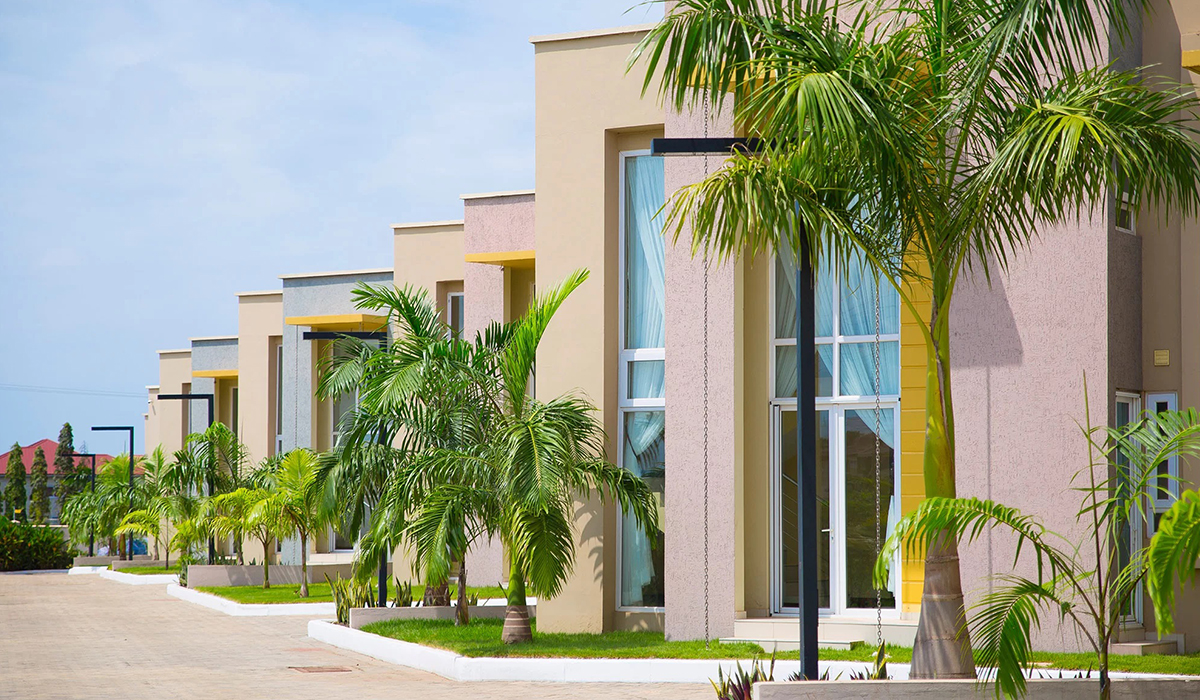
Sector overview: Residential market
Residential facilities comprise structures used or intended to be used for dwelling, living or as a sleeping space by an individual, households, or groups of people.1 The development of residential structures has been championed by both government and the private sector. Residential structures have grown from a total of 3.39 million structures in 2010 to 5.86 million structures in 2021. • Despite the increase in residential structures in the last 11 years, Ghana still has a housing deficit of 1.8 million. According to the Ministry of Finance, about 60% of Ghana’s urban population needs government assistance in accessing decent housing facilities. In line with this need, Ministry of Works and Housing is implementing a number of initiatives to provide affordable housing units and create an enabling environment for private sector participation. • About 9 out of the 23 universal banks in Ghana have official mortgage products ranging from buying to renovating homes. The National Homeownership Fund is also working in partnership with three universal banks, the Rent to Own Scheme of the Affordable Real Estate Investment Trust, as well as GCB capital to plug the housing deficit. • On the supply end of the market, Government is also committed to providing land to developers, infrastructure at designated affordable housing project sites; and tax incentives and exemptions. The Ministry of Works and Housing in collaboration with the State Housing Corporation has also commenced work on the construction of 6,584 rental housing units at the district level for public workers.

This is a great reminder that financial planning isn’t just about numbers; it’s about aligning your money with your life goals. Physician Lifecycle Planning can help you make the most of your earning potential while ensuring you’re also prioritizing your well-being and quality of life.